
Find information on how to make a Protected Disclosure under the external procedures in place in the HEA.
Find information on how to make a Protected Disclosure under the external procedures in place in the HEA.

INSPIRE is a €750 million investment package that will address research infrastructure needs across the higher education sector while ensuring alignment with national research and innovation priorities.

Tracking graduate outcomes is crucial to improving the quality of education for students and outcomes for graduates.
HEA launches Student Progression Data
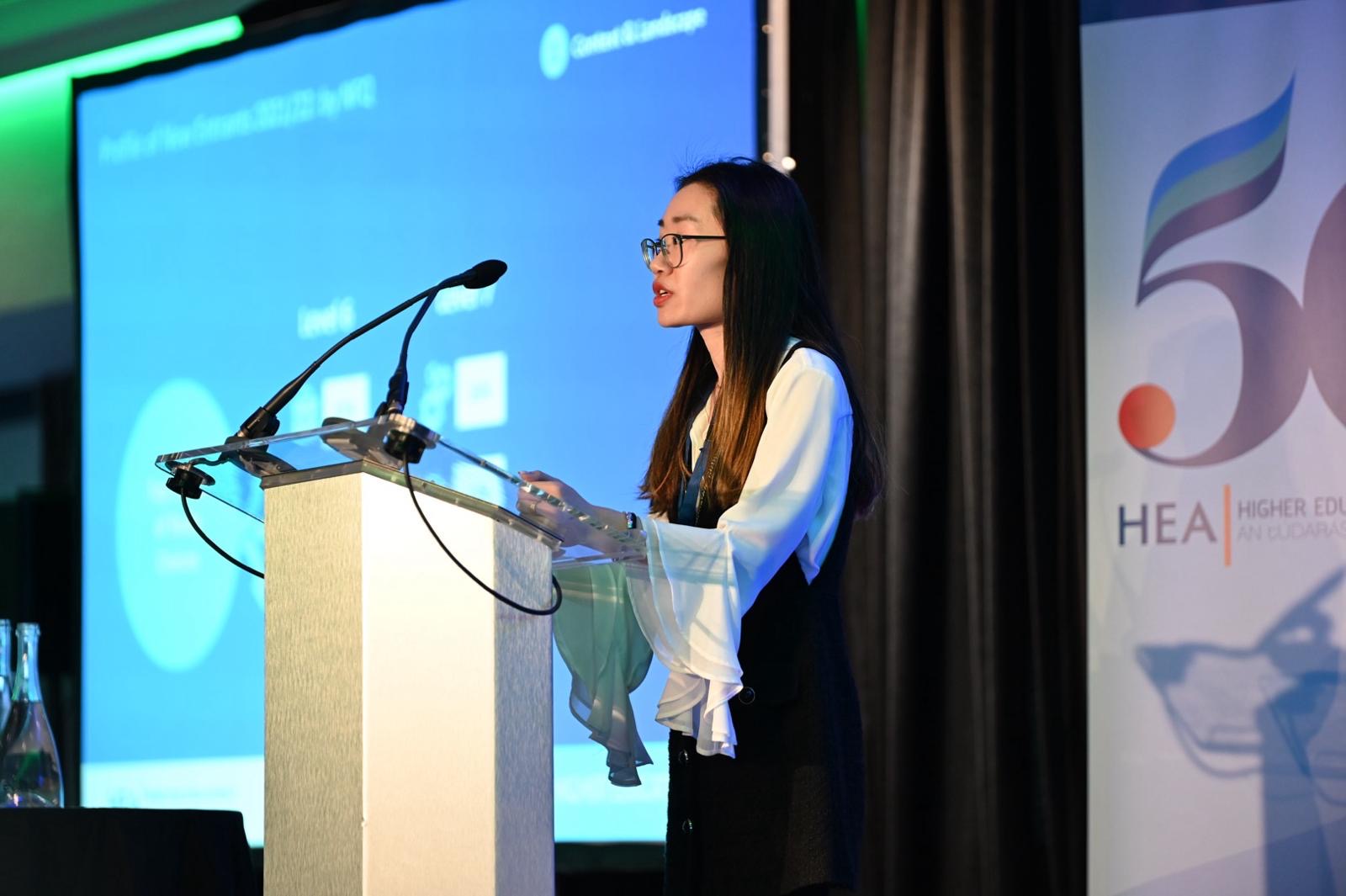
The Higher Education Authority (HEA) is launching today the latest Student Progression Data at a conference exploring student progression in Higher Education held in Croke Park.
Progression rates relate to the percentage of first year full-time undergraduate new entrants who continue and progress in their studies the following academic year. The report reveals that national progression rates are returning to pre-Covid levels, at 85%. The HEA began tracking and reporting on student progression in 2007. Since then, it has become a leader in advancing our knowledge and understanding of student progression and the factors influencing progression rates in Ireland. This has enabled the identification of cohorts who have a higher risk of non-progression in higher education. These include entrants who identify as male, entrants coming from disadvantaged areas, and entrants with lower Leaving Certificate points on entry.
The conference, organised by the HEA, brings together key stakeholders from the Irish Higher Education sector, the Further Education and Post-Primary sectors, the Organisation for Economic Co-operation and Development (OECD), and the UK’s Higher Education Policy Institute (HEPI), to discuss these latest figures and to consider strategies to enable student progression. A series of Policy Workshops are being held with a view to informing future HEA policy in this area. Specifically, these focus on the key areas of student success and student experience, belonging and connectedness, HE pathways and transitions, and teaching, learning and assessment.
The new HEA report publishes progression rates for 2021/22 new entrants progressing into the 2022/23 academic year. The key findings of the report include:
Speaking at the event Dr. Vivienne Patterson, Head of Skills, Engagement & Statistics, highlighted the importance of collecting and analysing data on student progression:
‘Today is about adding colour to our quantitative evidence through engagement with our stakeholders who work directly with the learner. This is pivotal in informing the development of strategies to support student progression. It is vital that we understand the challenges that students are experiencing in a post-Covid environment. Mental health and wellbeing, connectedness and belonging are all central to furthering our understanding to better support student success.’
Tim Conlon, Head of Policy at the HEA added:
“Under our new Act, the HEA now has additional opportunity to promote and support student engagement and student success in higher education. There are many definitions of success of course, but supporting many students into, through and on from higher education into successful lives is a hallmark of our system and an opportunity that should be available to all. Using data and evidence, alongside the student voice, such as we are doing here today, is the most productive way to progress this agenda together.”
Higher Education Outcomes - Non Progression 2021 - Central Statistics Office